At Flexo Wash, we see companies invest heavily in high-end imaging technology, only to see that investment undermined by inconsistent manual cleaning after the print run.
In manual cleaning operations, cleaning time becomes a bottleneck, causing dirty plates to stack up. This bottleneck creates a secondary challenge: dried-on ink. It compromises print quality by making the plates harder to restore to their original state without causing wear and tear on the delicate surface.
Eliminating Mechanical Variability
One of the biggest technical challenges with manual cleaning is inconsistency. Varying brush pressure and uneven drying times introduce microscopic damage to the plate surface. An automated approach eliminates this variability.
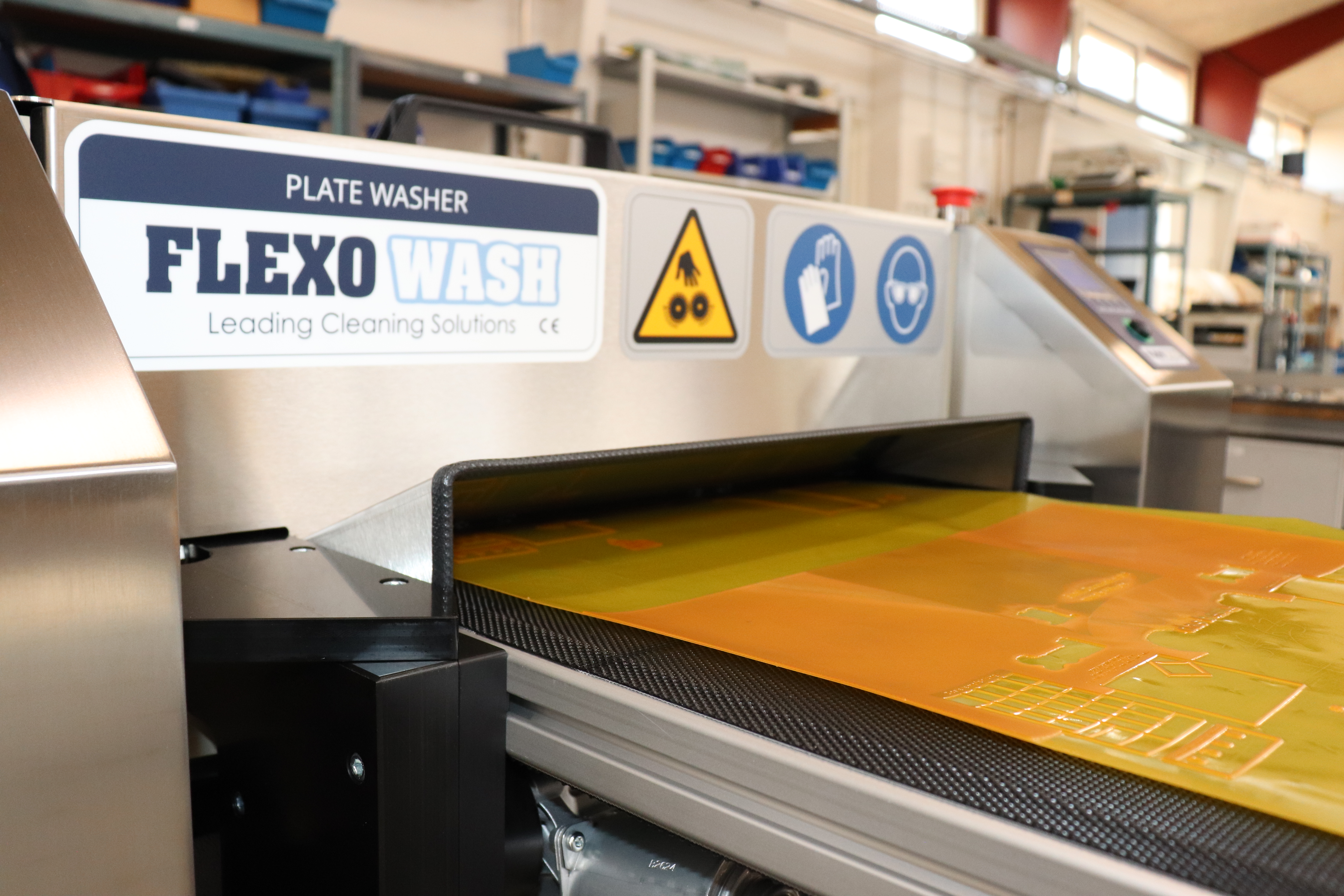
The system provides consistent cleaning by using steady mechanical action. It makes use of specially developed brushes operating at a constant pressure, which is gentle on delicate halftone dots, yet strong enough to remove dried ink.
The Role of Liquids in Plate Longevity
Optimisation requires a deep understanding of the interaction between ink types and cleaning liquids. By integrating automated plate washing systems, you achieve a controlled process where the liquid always maintains the correct strength and temperature. This prevents the plate from "swelling" - a critical factor in maintaining printing precision over multiple runs. In manual cleaning we often see solvents being used for cleaning causing swelling and this lowers the lifetime of the plates.
Optimisation that can be Felt on the Bottom Line
True optimisation is only achieved when the entire plate life cycle is under full process control. By automating the cleaning process, you remove an unknown variable in the plate room, creating a foundation for higher productivity, fewer rejections, and more predictable production.
Strategic Maintenance: Preventing Problems Before They Arise
The most efficient way to manage a press room is to shift focus from "solving problems" to "preventing them". By implementing standardised automated cleaning procedures, you ensure that plates are always in "as-new" condition when archived. This proactive approach significantly reduces the need for costly plate remakes and minimises even more costly unscheduled press stops caused by residue or physical damage.
Precautionary checking of Plate cleanliness and recovery, and sometimes ‘recleaning’ when starting up a new job, will not be required anymore.